Drug candidates that form covalent bonds with their targets were historically avoided because of toxicity concerns. However, covalent drugs with controlled reactivity are now recognized as promising agents that combine manageable safety with substantial advantages, including enhanced potency, prolonged target residence times, and access to challenging targets.
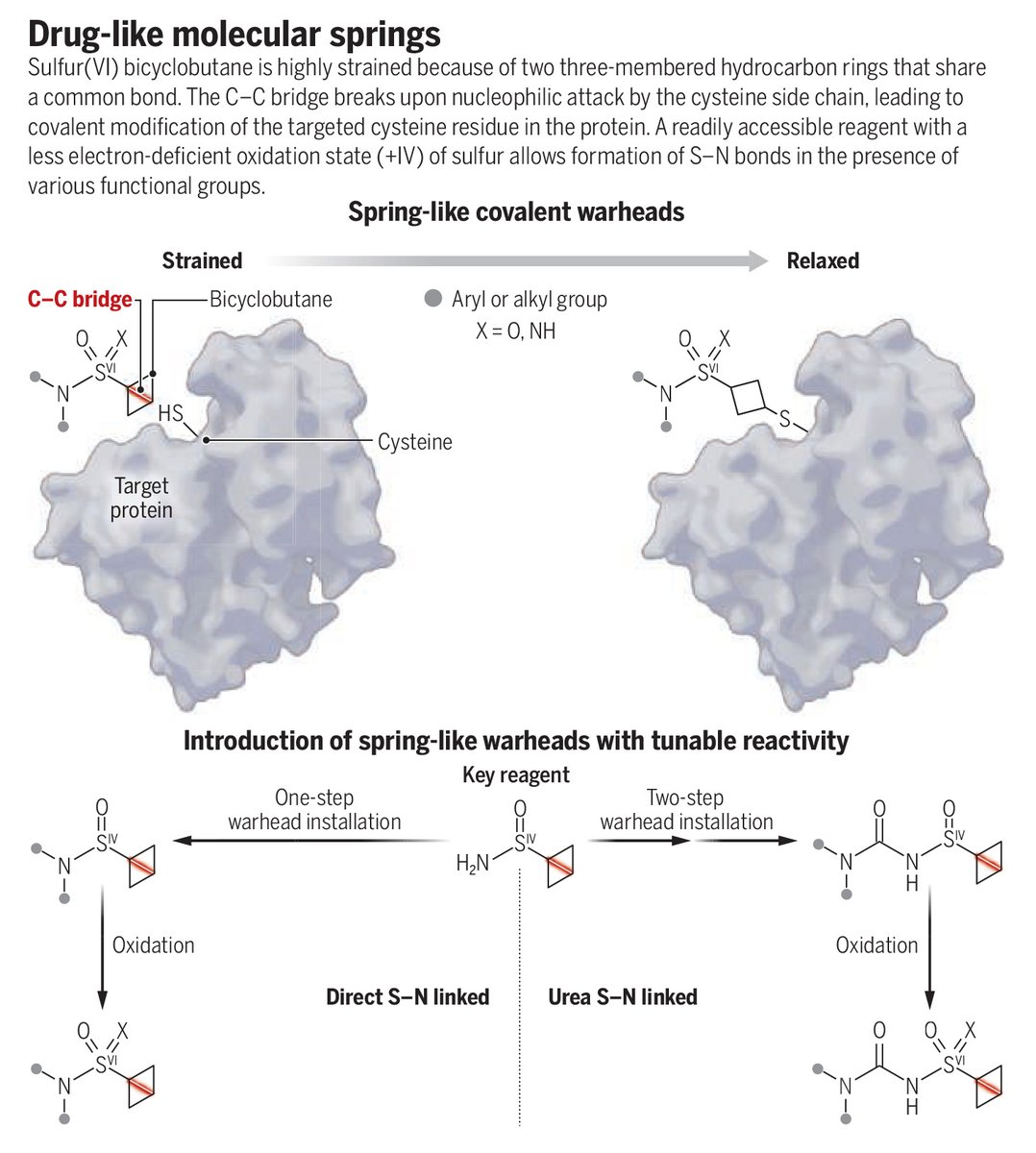
This shift is reflected in recent covalent drug approvals, particularly those targeting protein-phosphorylating enzymes (kinases) and cancer drivers such as the oncogenic protein KRAS. A central feature of these drugs is a “warhead” reacting with an amino acid residue in the target protein to form a covalent bond. Yet the repertoire of drug-like, chemically accessible reactive moieties remains limited.
In a new Science study, researchers report streamlined access to an underexplored warhead type with well-tempered reactivity that can be appended to complex scaffolds late in synthesis, enabling practical use in drug discovery.
Learn more in a new
#SciencePerspective:
Drug candidates that form covalent bonds with their targets were historically avoided because of toxicity concerns. However, covalent drugs with controlled reactivity are now recognized as promising agents that combine manageable safety with substantial advantages, including enhanced potency, prolonged target residence times, and access to challenging targets.
This shift is reflected in recent covalent drug approvals, particularly those targeting protein-phosphorylating enzymes (kinases) and cancer drivers such as the oncogenic protein KRAS. A central feature of these drugs is a “warhead” reacting with an amino acid residue in the target protein to form a covalent bond. Yet the repertoire of drug-like, chemically accessible reactive moieties remains limited.
In a new Science study, researchers report streamlined access to an underexplored warhead type with well-tempered reactivity that can be appended to complex scaffolds late in synthesis, enabling practical use in drug discovery.
Learn more in a new #SciencePerspective:










 العربية